| Name of Legislation | Container Deposit Program, under the Act on the Promotion of Saving and Recycling of Resources [1] | |||||||||||||||||||||||||||||||||||||||||||||||||||||||||||||||||||||||||||||||||||||||||||||||||||||||||||||||||||||||||||||||||||||
| Date Implemented | 1985, current version implemented in 2017 | |||||||||||||||||||||||||||||||||||||||||||||||||||||||||||||||||||||||||||||||||||||||||||||||||||||||||||||||||||||||||||||||||||||
| Containers Covered | Glass containers | |||||||||||||||||||||||||||||||||||||||||||||||||||||||||||||||||||||||||||||||||||||||||||||||||||||||||||||||||||||||||||||||||||||
| Beverages Covered |
| |||||||||||||||||||||||||||||||||||||||||||||||||||||||||||||||||||||||||||||||||||||||||||||||||||||||||||||||||||||||||||||||||||||
| Deposit and Handling Fees |
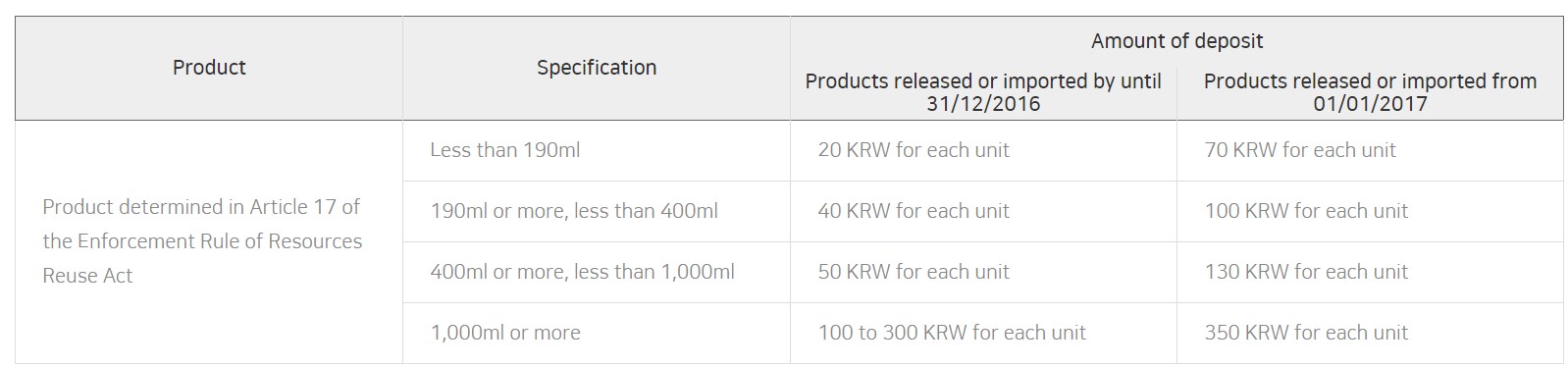
Figure: Deposit Amounts as amended by Article 12 of the Enforcement Rule of Resources Reuse Act, Appendix 4. Sourced from Korea Resource Circulation Service Agency.[2] | |||||||||||||||||||||||||||||||||||||||||||||||||||||||||||||||||||||||||||||||||||||||||||||||||||||||||||||||||||||||||||||||||||||
| Handling Fees |
| |||||||||||||||||||||||||||||||||||||||||||||||||||||||||||||||||||||||||||||||||||||||||||||||||||||||||||||||||||||||||||||||||||||
| Unclaimed Deposits | Used to fund and promote the system. | |||||||||||||||||||||||||||||||||||||||||||||||||||||||||||||||||||||||||||||||||||||||||||||||||||||||||||||||||||||||||||||||||||||
| Program Success |
Sourced from the Korean Resource Circulation Service Agency [4] |
Details
In 2003, South Korea replaced its previous recycling scheme, which ran from 1992, with a new Producer Deposit Refund Scheme in line with newly amended legislation. This new scheme included a container deposit program for empty glass bottles. [5] It is one of the only programs of its kind in Asia.
In January 2017, the South Korean government implemented an increase to the deposit amount on bottles. This saw an increase in redemption rates in specifically soju and beer bottles from 30% to 47% in a six month period. In an effort to further increase this rate, the government also looked into expanding its reverse vending machine (RVM) infrastructure from 108 locations. [6]
In May 2020, the Korean Environment Ministry announced a deposit program on disposable cups. The country had a similar program from 2002-2008, but “was scrapped in 2008 due to lack of legal grounds and issues over management of deposits that were not returned to customers.” [7] The program is expected to be implemented in 2022.
Footnotes
[1] “Act on the Promotion of Saving and Recycling of Resources Act No. 15101, Nov. 28, 2017.” Last accessed August 17, 2023.
[2] “Definition.” Korea Resource Circulation Service Agency. Last accessed August 21, 2023.
[3] “Beverage Container Deposit System.” Korea Environment Corporation. Last accessed August 21, 2023.
[4] “Packaging Recycling Statistics.” Korean Resource Circulation Service Agency. Last accessed September 14, 2023.
[5] “Increased deposits on empty bottles lead to hike in return for recycling.” Yonhap News Agency. August 21, 2023.
[6] See footnote 5.
[7] “S. Korea to introduce disposable cup deposits in 2022.” Yonhap. The Korea Herald. May 21, 2020.